Renewable energies applications:
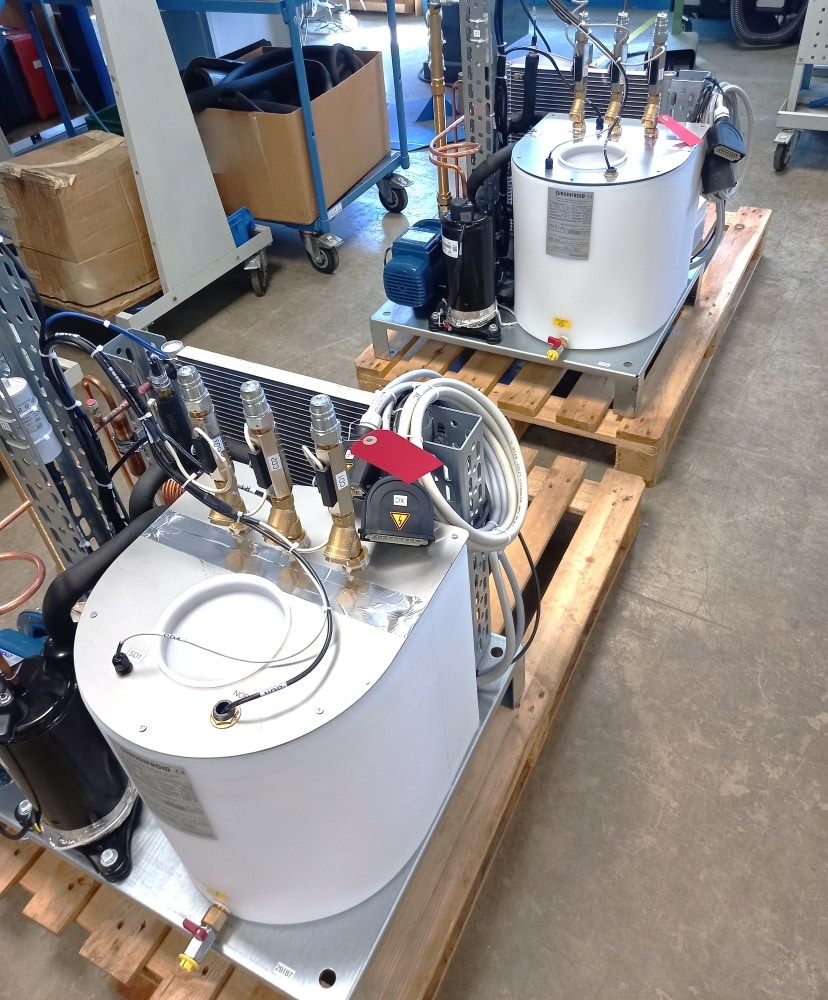
ERI 25 water coolers for Mob-Energy
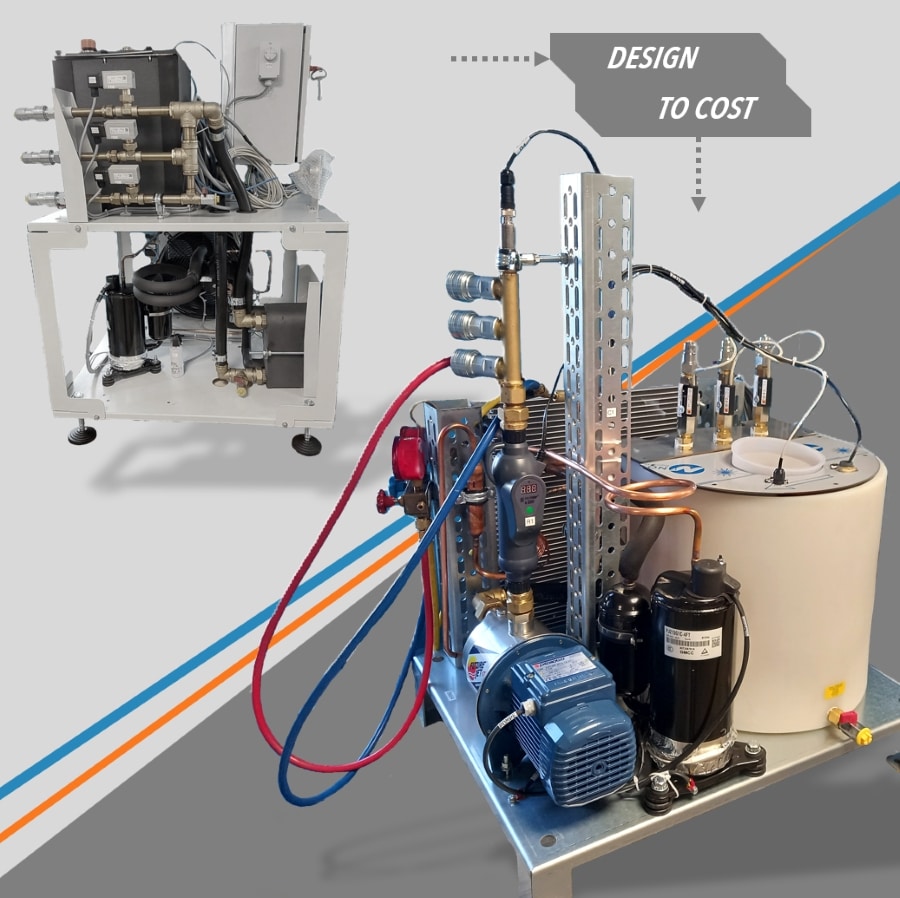
“Design-to-cost” and mass production, in renewable energies activities.
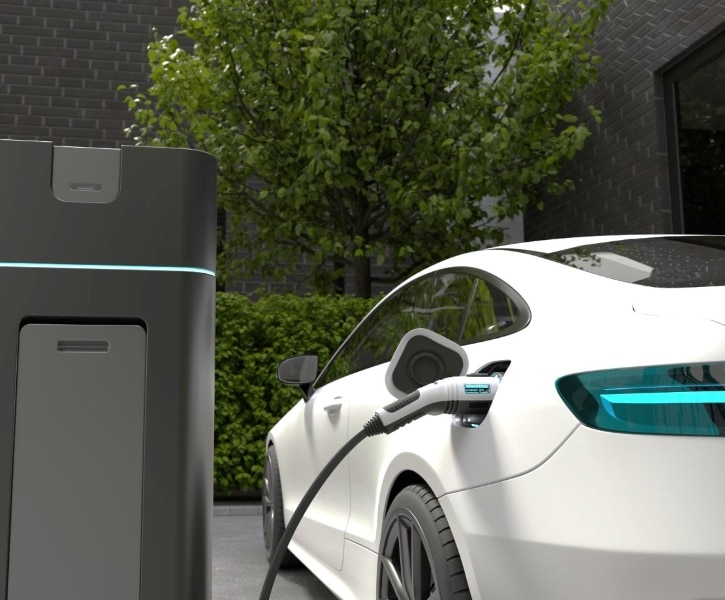
The transition to electric mobility implies an increasing need for charging.
Indeed, the larger the fleet of electric vehicles becomes, the more electricity storage and distribution infrastructure needs to be deployed.
This is the specialty of the MOB-ENERGY group, in the Lyon region, which has been deploying renewable energies charging station solutions for customers & visitors, for employees or for vehicle fleets for many years now in the territory.
Of course, these stations are fitted with our ERI coolers (chillers).
What are the technical challenges surrounding the deployment of these renewable energies terminals?
Maximize the energy efficiency of the facilities to be able to charge the maximum number of vehicles at the same time, with optimal performance and reliability that withstands all weather conditions.
But “energy storage and distribution” implies “precise and reliable temperature management,” especially since the devices are often installed outdoors and are subject to large variations in ambient temperature, which can damage the internal components and the efficiency of the entire system (condensation, humidity, excessive ventilation: everything must be optimized to reduce energy consumption).
And it is naturally EURODIFROID that is supporting the ramp-up of this deployment, on the “cold” brick, with an initial industrial specification with a strong “design-to-cost” orientation.
What is “design-to-cost”?
“Design to Cost” (DTC, or Target Cost Design) is a product design methodology that aims to control the development and manufacturing costs of a product from the earliest design phases.
Costs are built into the product from the earliest conceptual decisions and, by making the right design decisions early on, unnecessary costs can be avoided in later phases of the product lifecycle.
This approach allows teams to design high-quality devices while respecting predetermined cost targets from the outset, should it be for this renewable energies sector or any other industry. It also avoids costly and late engineering change orders, and brings new products to market more quickly.
Unlike “target costing”, which aims to achieve a defined cost, DTC takes into account costs throughout the development cycle to avoid unnecessary expenses.
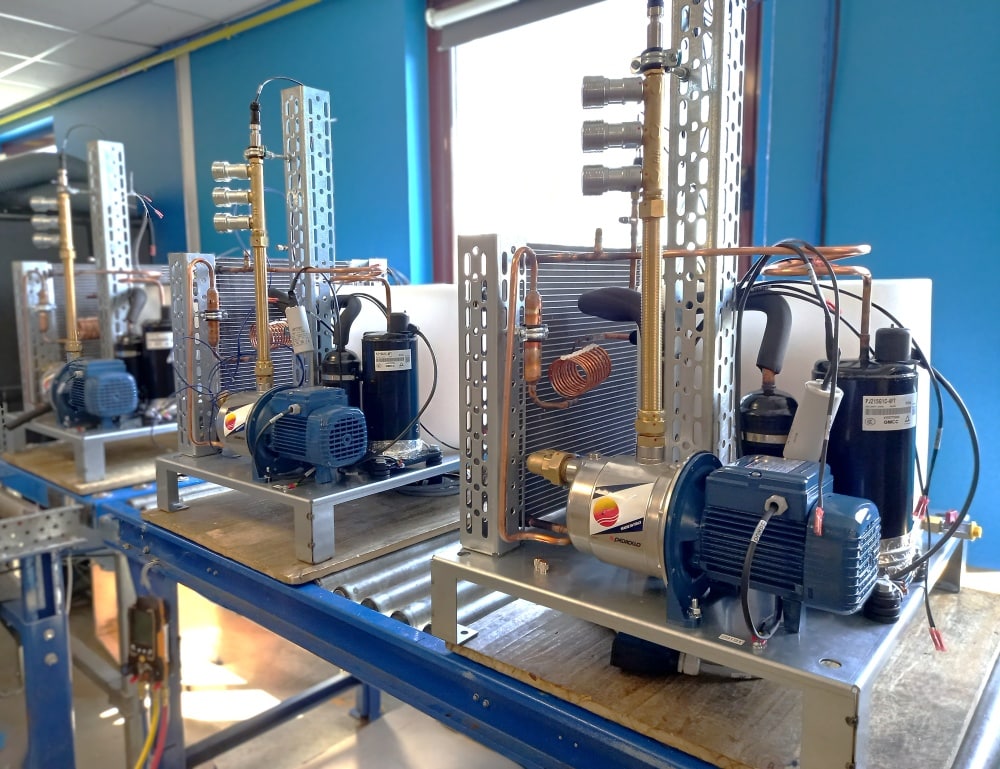
Specifically, regarding these ERI 25…
On paper, an ERI 25 water cooler is not a very complex device to design: we are used to dealing with much larger and more complex devices!
But precisely: the challenge of cost optimization (components, assembly, etc.) becomes all the more pressing when the product is simple and compact.
During the initial redesign, the chassis, for example, was completely revised: instead of a 2-tier assembly, the entire cooler is now assembled on a single base, which is much more compact and economical.
Thus, with the same performance as the initial product, our design has enabled a significant reduction in the cost price (of around -20%), going hand in hand with an improvement in production capacity (simplified assembly).
Main features of ERI 25:
- Cooling capacity of 2800 W at 20°C water outlet, 45°C ambient
- A hermetic rotary compressor using R134a (HFO blend refrigerant, GWP 631)
- An integrated copper coil evaporator
- A non-ventilated air-cooled microchannel condenser
- A 15mm PE tank with a capacity of 45-50 L and an electronic water level indicator
- A 500 W inline heating element
- A Pedrollo Jetm 1A centrifugal pump
- 3 return/supply ports with a flow controller on each port
- A hydraulic pressure transducer
- A connection system using Parker male and female self-sealing fittings (6 pairs total)
- A one-piece chassis and galvanized screws, pre-drilled and with mounting hardware for integration into the customer’s chassis
- A remote IP55-rated Fibox plastic control box
- A programmable logic controller (PLC) ELIWELL Free Smart manages compressor and heating element start-up based on tank temperature.
- It also features Modbus RS485 communication with system start/stop, read/write of setpoints (heating/cooling), tank temperature reading, and fault reporting (flow rate, level, circuit breaker).
A superb technical and industrial collaboration.
More than just a supplier, EURODIFROID is a real asset to your project teams.